Smarter, Faster, More Accurate Decisions
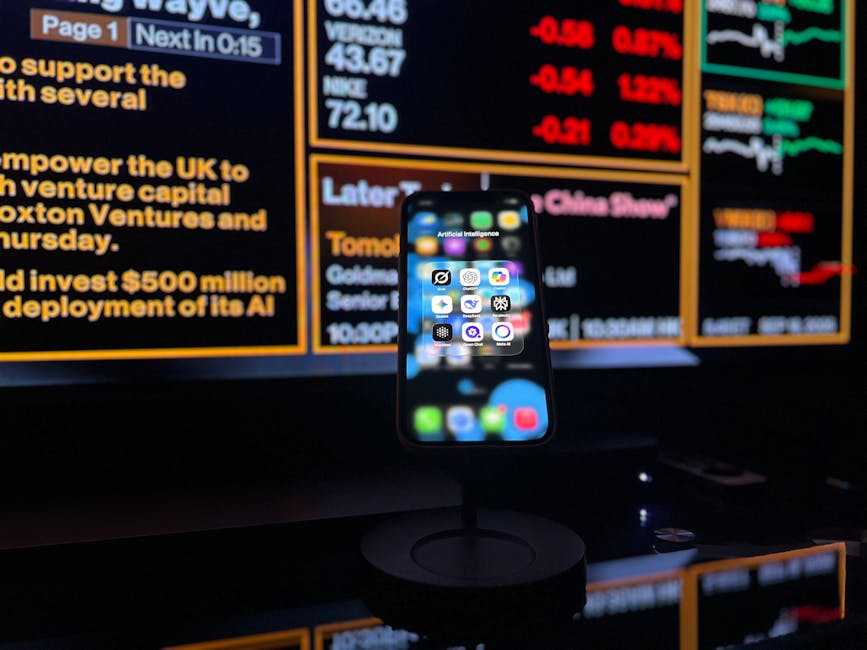
AI doesn’t sleep, pause for coffee, or second guess itself. That’s part of why it’s transforming how people invest. Modern algorithms can now crunch through millions of data points in real time earnings calls, market charts, even Reddit threads and tweets to give investors a clearer picture of what actually matters. This isn’t just automation. It’s intel at machine speed.
Predictive analytics and machine learning go a step further. Instead of just showing raw numbers or charts, they help make sense of the noise. Algorithms identify patterns, forecast potential moves, and spot signals before most humans can blink. It’s not about playing crystal ball; it’s about narrowing the chaos.
Here’s what’s changed: tools that used to be guarded behind hedge fund doors are now in the hands of retail investors. Apps and platforms powered by AI give regular people a shot at smarter trades some with dashboards that rival Wall Street terminals. The edge might not be complete parity, but it’s closer than ever.
Automation and Algo Trading: Not Just for Wall Street
The gap between Wall Street pros and everyday investors is shrinking, fast. Robo advisors those AI powered platforms that once seemed like a Silicon Valley novelty are now mainstream. They’re giving retail investors access to skin deep portfolio strategies that adapt based on risk profile, financial goals, and shifting market conditions. Plug in a few details about your income, timeline, and tolerance for turbulence, and the robot builds the plan.
On the speed side of the spectrum, trading bots are the new workhorses. Running 24/7, they process news, technical indicators, and market moves in milliseconds, squeezing out split second advantages. They’re not just reading charts they’re reacting to them, executing trades with no hesitation. And they’re tireless.
But maybe the biggest shift is access. High frequency, algorithmic trading used to be reserved for those with deep pockets and serious coding skills. Now? You can download an app with built in strategies and tweak a few sliders to launch a bot of your own. It’s not quite plug and play, but it’s close. The democratization of trading tech is real and it’s rewriting who gets to participate and at what level.
Risk Management Gets an Upgrade

Artificial intelligence is rapidly redefining how investors assess risk. Markets move faster than ever, and traditional risk models are being pushed to their limits. AI fills the gap by offering real time insights, simulations, and detection systems that boost resilience and reduce exposure.
Real Time Market Monitoring
AI models can now monitor global markets continuously, analyzing a wide range of signals to identify potential downturns and sudden volatility. These advanced systems detect patterns that the human eye or even older algorithmic models might miss.
Alerts based on predictive volatility indicators
Pattern recognition targeting early signs of market shifts
Integration of alternative data sources (weather patterns, news cycles, etc.)
Portfolio Optimization Made Smarter
By simulating thousands of market scenarios, AI helps investors prepare for a wide range of outcomes. This scenario planning enables smarter rebalancing, more efficient diversification, and stronger defense against systemic risk.
Monte Carlo simulations to test risk exposure
AI powered stress testing under extreme conditions
Scenario planning tuned to individual investment goals
Fighting Fraud and Ensuring Compliance
Financial fraud and regulatory breaches are constant threats. AI is increasingly being used to automate compliance checks and flag suspicious activity, enhancing both security and trust in digital investment platforms.
Real time fraud detection using anomaly recognition
Automation of compliance reporting and tracking
Machine learning models trained on historical fraud cases
As AI continues to evolve, its role in risk management will only deepen creating systems that are not only responsive, but proactively defensive.
Human + AI = The New Investing Edge
Pairing human advisors with AI tools is proving to be more than just a trend it’s becoming the strategy of choice. Neither side replaces the other. Instead, they fill in each other’s gaps. AI can crunch millions of data points in seconds, but it doesn’t understand context or nuance the way people do. Human advisors bring judgment, emotional awareness, and long term perspective something no algorithm can fake.
In practice, this means AI handles the grunt work. It spots patterns, flags anomalies, runs simulations instantly. Advisors step in to guide big picture decisions, help clients handle market stress, and translate raw data into real world plans. It’s not man vs. machine. It’s man plus machine.
But all this only works with trust. Investors are understandably wary of handing their money over to what feels like a black box. That’s where explainable AI comes in. Clear logic, laid out simply, builds confidence. So do transparent systems that show how recommendations are made.
The best hybrid setups don’t hide the AI they use it openly as a tool, not a crutch. And in return, humans stay human: focused on relationships, risk tolerance, and the long game.
The Bigger Picture: A Fintech Revolution in Progress
AI may be the loudest disruptor right now, but it’s far from the only force changing how money moves. Alongside machine learning and predictive analytics, there’s a much larger shift in the finance world fueled by emerging technologies. Blockchain is decentralizing value exchange. Neobanks are rethinking the traditional banking model from the ground up. Payment systems, lending, even insurance everything is being rebuilt for speed, inclusion, and transparency.
For creators paying attention to AI in investing, zooming out is essential. The smart money isn’t just tracking stock tickers it’s watching the infrastructure evolve. These changes are interconnected. Understanding the broader fintech wave can give everyday investors and content creators alike a sharp edge.
To see the full scope of what’s unfolding, check out the fintech revolution explained.
What to Watch Going Forward
AI is running hot in finance, and regulators are starting to notice. The question isn’t if oversight will increase it’s how much and how fast. Countries like the U.S. and EU are already drafting frameworks aimed at increasing transparency and preventing AI driven manipulation. But enforcement? Still muddy. The tools are advancing faster than the rulebooks.
That raises tough questions. Is it ethical for algorithms to front run trades based on public sentiment scraped from millions of users? Where’s the line between smart data use and market distortion? Data privacy isn’t just a tech problem anymore it’s a financial one too, as AI tools get more aggressive in collecting and interpreting signals.
Then there’s the structural risk. AI might make markets faster and smarter, but it can also create hidden fault lines. Algorithmic feedback loops, flash crashes, and herd behavior triggered by model based decision making could end up making the system more fragile, not less. As more investors lean on the same tools, diversity of thought drops and that’s bad in any ecosystem.
So the big picture? AI is transforming how we invest, but systemic stability isn’t guaranteed. Watch the regulators, question the ethics, and remember: an efficient machine still needs human supervision.
Stay informed, stay critical AI is powerful, but it’s not magic.
 Conniella Hoffmanney (Author & Lifestyle Editor)
Conniella Hoffmanney is an author and the Lifestyle Editor at The Vital Insight Hub. Specializing in cultural trends and lifestyle journalism, Conniella curates the platform’s content on entertainment, art, and social dynamics. Her creative vision and engaging writing style give readers a unique and enriching perspective on the cultural events that shape our world.
Conniella Hoffmanney (Author & Lifestyle Editor)
Conniella Hoffmanney is an author and the Lifestyle Editor at The Vital Insight Hub. Specializing in cultural trends and lifestyle journalism, Conniella curates the platform’s content on entertainment, art, and social dynamics. Her creative vision and engaging writing style give readers a unique and enriching perspective on the cultural events that shape our world.